Apple just held WWDC 2026. Tim Cook said goodbye. And buried underneath the farewell tour was something that actually matters to you as a digital decision-maker: Siri finally works.
Well, sort of. More on that in a moment. 😬
What actually happened at WWDC
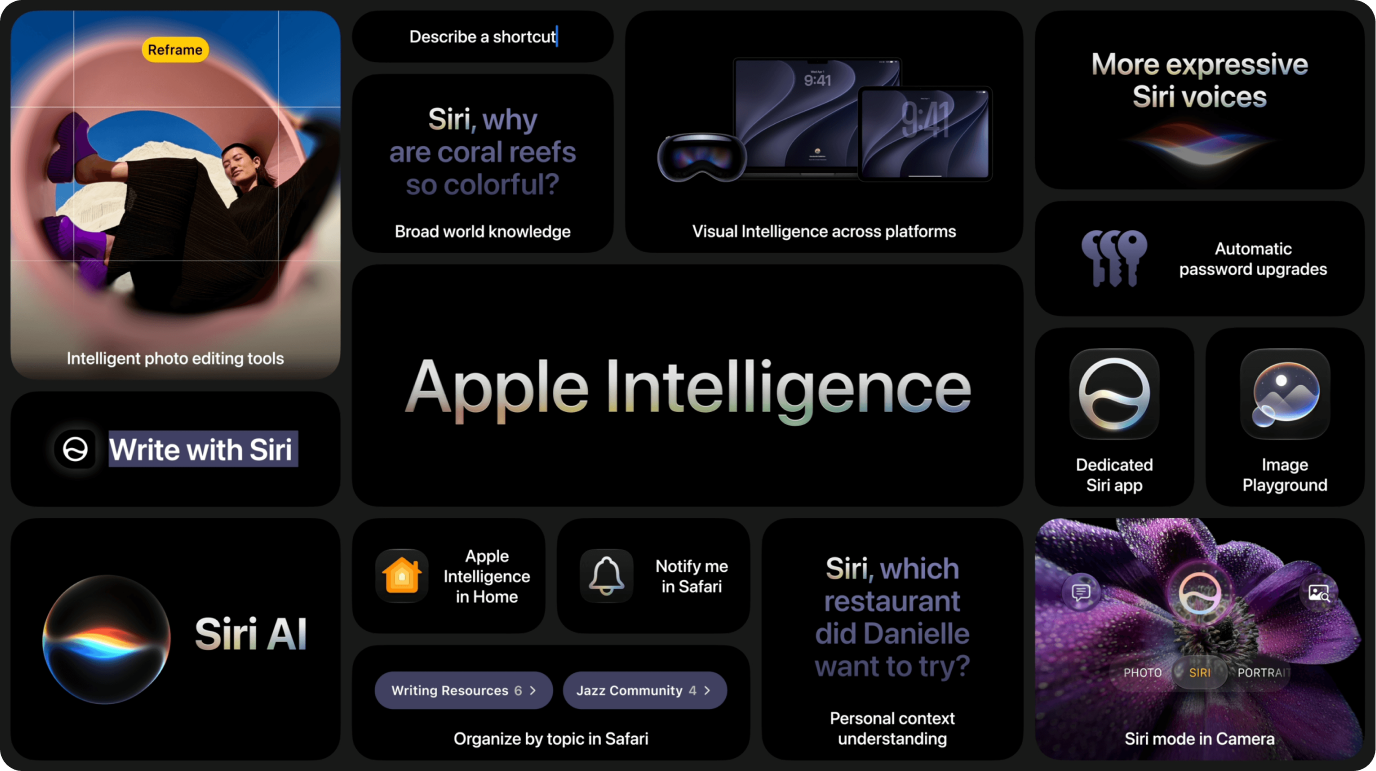
After two years of promising a smarter Siri and delivering something closer to a slightly more confident autocomplete, Apple unveiled Siri AI - a ground-up rebuild powered by Apple Intelligence, running on a custom Google Gemini model underneath.
Yes. Apple's privacy-first assistant now runs on Google's brain. We'll let that sink in.
The new Siri isn't just "better at answering questions." It's architecturally different. It can:
- Understand what's on your screen in real time (Visual Intelligence)
- Pull context from your calendar, contacts, photos, and emails to give answers that actually relate to your life
- Execute multi-step actions across apps - book a restaurant from a text someone sent you, without you copy-pasting anything
- Maintain context across a full conversation, not just one command at a time
- Run as a standalone app with full conversation history synced across your Apple devices
This is no longer a voice shortcut to a search engine. This is an agent running on your device.
And the fact that it actually pauses before answering? That's a tell. That's a model thinking, not a lookup table firing. After Apple's embarrassing WWDC 2024 vapourware demo - which eventually cost them a $250 million class-action settlement 🫣 - they clearly can't afford to overpromise again. The latency is the credibility signal.
What This Means If You're Building Digital Products
Your app is about to get disintermediated - or supercharged
The biggest enterprise shift isn't Siri itself, but rather the infrastructure underneath it.
Apple has formalized App Intents as the only way to integrate with Siri going forward. The old SiriKit framework - which has been in apps since 2016 - is now officially deprecated. You have roughly two to three years before it stops working entirely.
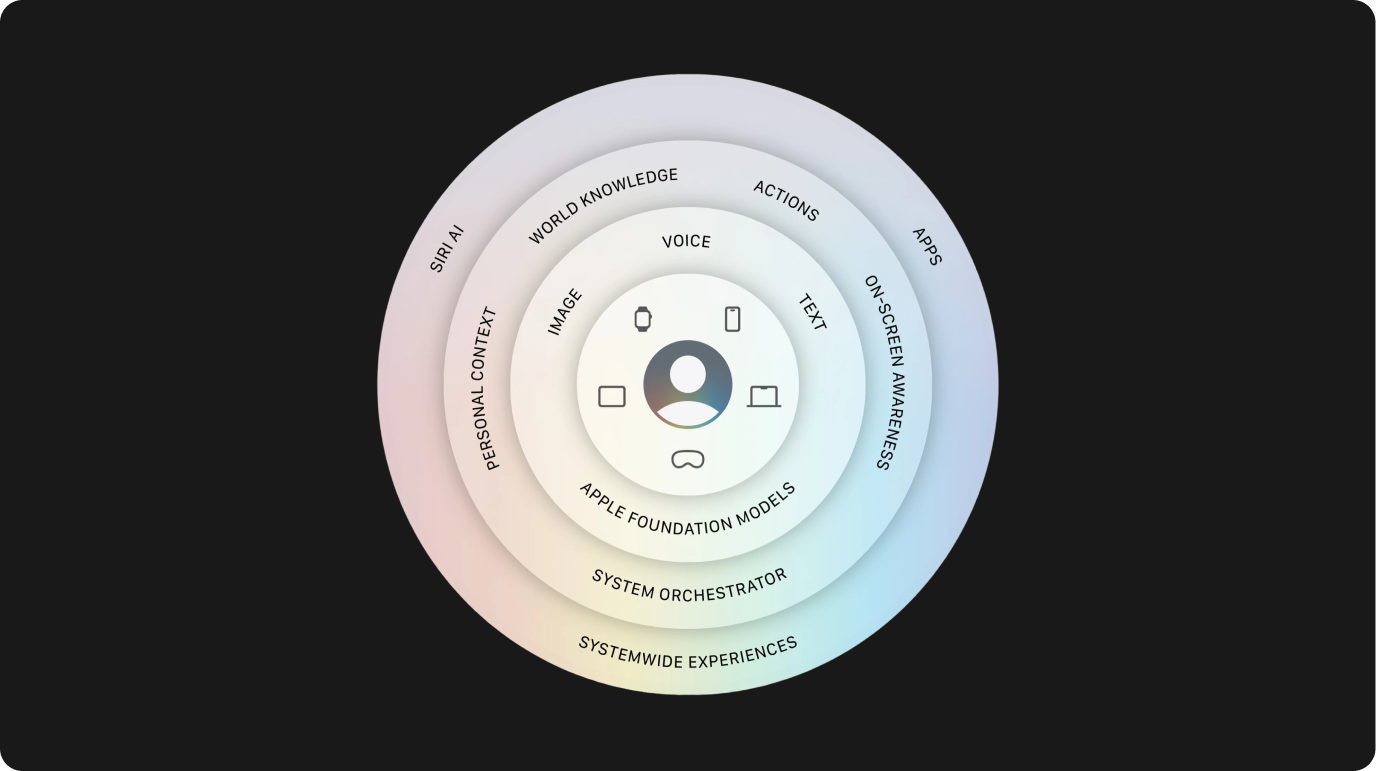
This is not a minor API update. App Intents works on fundamentally different principles: at compile time, your app declares what it can do in structured metadata. The OS can then understand and orchestrate your app's capabilities without even launching it. Siri can chain your app's actions with actions from other apps - autonomously, based on user intent.
It’s worth seeing this as the next step in a pattern Apple has been pushing for years. Remember App Clips? They were about carving out a tiny piece of your app that could run standalone, without even downloading the full app. App Intents is the same direction, but at the capability layer: your app becomes a set of reusable actions the OS can compose. Intent-based thinking won’t be optional.
If your enterprise app hasn't been updated to support App Intents, it will become invisible to the most powerful AI layer on Apple's 2.5-billion-device ecosystem. If it has - it becomes a node in an agent network.
Cross-app automation is now native
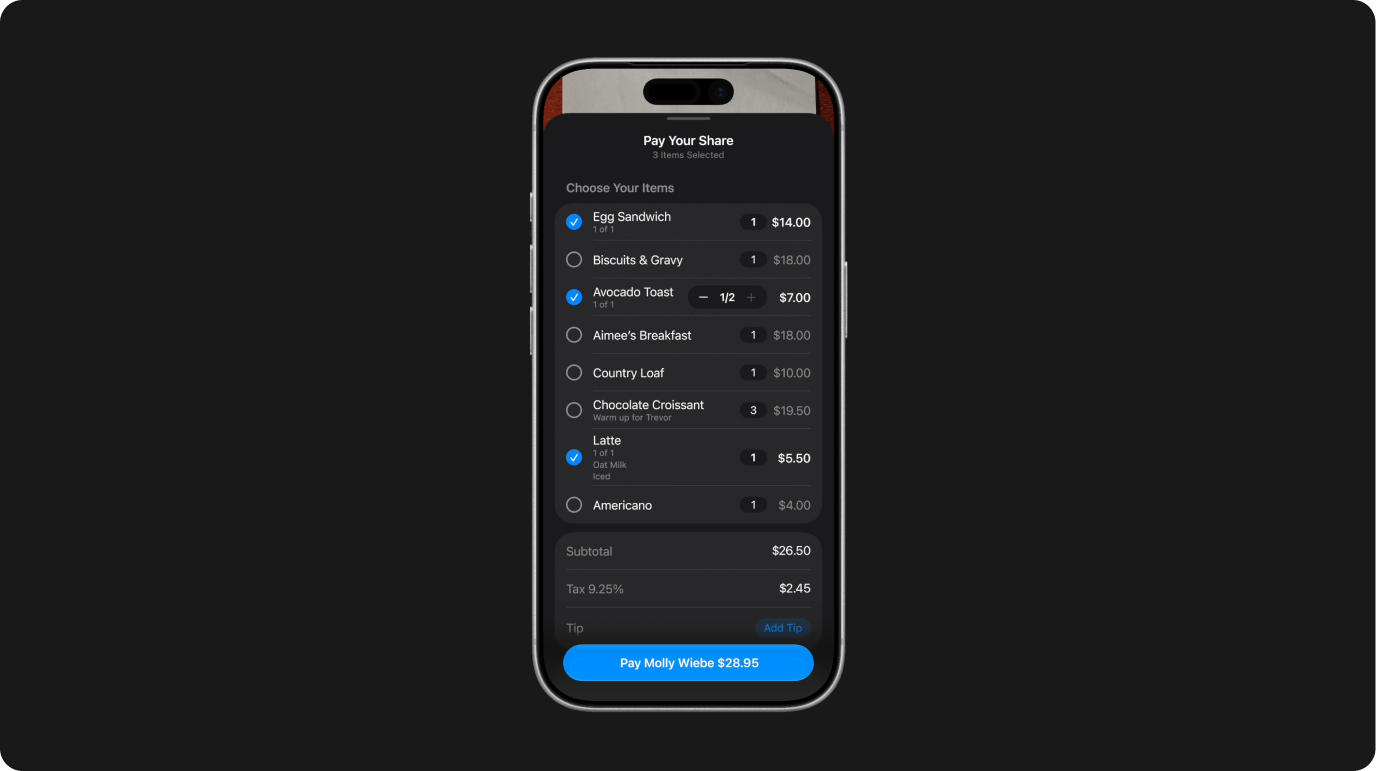
The use case Apple demoed says it all: "Use my banking app to pay the person who just messaged me." That's a three-app workflow - messages, contacts, banking - orchestrated by Siri with a single voice command.
For enterprise, this is significant. Workflow automation that used to require a dedicated integration layer (Zapier, custom middleware, expensive RPA tooling) can now be surfaced through a natural language interface that employees already carry in their pocket.
The question for your product team is no longer "does our app work?" It's "what can our app do that Siri can help someone accomplish?"
The privacy question just got complicated
Apple positioned this as privacy-first. And technically, their Private Cloud Compute architecture is well-designed. But the reality is: the most capable Siri queries will route through Google's data centres via their Gemini partnership.
For organisations in healthcare, HR, finance, or any regulated vertical - this isn't just a tiny footnote. It's a compliance question you need to answer before your employees start asking Siri to summarise patient records or draft performance reviews.
Your MDM strategy needs to evolve alongside your AI strategy.
A multi-assistant future is opening up
Btw, the strategic angle which most people are missing: Apple is opening the door to third-party AI assistants at the OS level. With "AI Extensions," Claude, ChatGPT, and Gemini can compete to be a user's default system AI provider.
That's a distribution surface that didn't exist six months ago. Enterprise AI solutions built on these models now have a direct path to the most-used devices on earth - without going through the App Store's traditional discovery funnel.
Now, about Europe
Here's where we have to say the quiet part out loud: if you're reading this from Belgium, the Netherlands, Germany, or anywhere inside the EU … you're not getting this on your iPhone anytime soon. 😢
Apple announced at WWDC that Siri AI will not be available on iOS or iPadOS in the European Union at launch, citing an inability to reach an agreement with EU regulators under the Digital Markets Act. Apple's official position is that regulators rejected every proposed solution for running Siri AI while "safely supporting other virtual assistants."
The irony is thick. The DMA was designed to break open closed ecosystems and give users more choice. The result, at least in this case, is that EU users get less access to innovation than the rest of the world. Again.
There's a small consolation: Siri AI will work on Mac, Apple Watch, and Vision Pro in the EU, because those platforms don't fall under the same gatekeeper rules. So if your enterprise runs on MacBooks - and most do - you'll get a meaningful taste of what's coming.
But on the iPhone and iPad that your frontline workers, sales team, and field staff carry every day? Nothing. For now.
The timeline is undefined. Apple has no public roadmap for EU compliance. So "later this year" is optimistic. "2027" is probably more honest.
Use this window wisely. Test Siri AI on Mac. Define your App Intents integration strategy. Decide how Gemini-routed queries interact with your data governance policies. By the time iOS Siri AI reaches Europe, you want to be ready to ship - not ready to start planning.
What to do right now
The three actions that actually matter here are product strategy decisions - not IT tickets. Here's what digital decision-makers in each of our core verticals should be doing right now.
1. Reframe your roadmap around intent, not interface.
Anything you planned to build as an in-app workflow assistant just got partially commoditised by the OS layer. That's not a reason to deprioritise it - it's a reason to rethink the framing. The question isn't "should we build a chat interface?" It's: what are the 3-5 most valuable things a user could accomplish in your app through natural language? Those become your App Intents surface. The UI stays, but the intelligence layer moves up to the OS.
Healthcare: A patient-facing app like a pharmacy or health companion doesn't need a custom chatbot to help users find their prescription history. If that action is exposed as an App Intent, Siri handles the conversation - and your app gets the action. Think: "Siri, reorder my blood pressure medication via [app]." No tap required. No funnel friction. For employee-facing tools like occupational health sidekicks, the same logic applies: "Siri, log my absence for today in [app]."
Banking & Insurance: The Apple demo literally used a banking payment as its flagship use case. "Pay the person who just texted me." If your banking or insurance app doesn't expose payment, claim submission, or policy lookup as App Intents within the next 18 months, a competitor's will - and Siri will route to them instead. The first mover here gets free distribution.
Energy: Field technicians and EV drivers are high-frequency mobile users. Imagine: "Siri, find the nearest available fast charger and start a session via [EV app]." Or for B2B energy platforms: "Siri, show me my consumption report for last month." These are short, high-value actions that are perfect App Intents candidates - and they remove friction at exactly the moments where users are most likely to abandon.
B2B Services: For HR, payroll, or workplace tools, the unlocked value is in daily micro-tasks. "Siri, submit my timesheet via [app]." "Siri, approve the leave request from [name]." These are the moments where an app either becomes part of someone's natural workflow - or gets replaced by one that does. App Intents is how you embed.
2. Use the EU delay as a design sprint window - not a waiting room.
Siri AI works on Mac in the EU right now. That's a test environment most product teams are ignoring. Run a structured sprint: map your core user journeys, identify the top five actions that could be voice- or intent-triggered, prototype App Intents implementations, and validate them on Mac before the iPhone rollout arrives. By the time Siri AI lands on EU iPhones - probably 2027 - you want to be shipping an update, not starting a discovery.
3. Make the Gemini routing question a product design decision instead of an afterthought.
Don't hand this to IT as a policy question. The right framing for your product team is: which user actions in our app are we comfortable routing through Google's infrastructure? For a consumer loyalty app, the answer might be most of them. For an occupational health sidekick handling sensitive employee data, it might be almost none. Design your App Intents surface accordingly - expose only the actions where cloud routing is acceptable, and keep the sensitive flows on-device or within your own infrastructure. This is a product decision with compliance consequences, not the other way around.
The new Siri isn't magic. But it's real this time. And the organisations that treat it as an infrastructure shift - not a feature update - will be the ones who move fastest when it finally arrives on this side of the Atlantic.
