TL;DR: Zoë now carries two hats at Nimble: Customer Success Manager for Support, and Internal AI Lead. The second one is new, and it exists because cool AI experiments don't compound on their own. Her mission for the next stretch: get the studio's AI knowledge out of individual heads and into shared flows.
Two hats, one story
Ask Zoë what she does and you'll get two answers that sound like they belong to different people, but it does make sense if you think it through. She's the Customer Success Manager who keeps the Support Engineers in flow and makes sure the digital products we built keep on improving long after the building track. On top of this, she's the Internal AI Lead, the person now responsible for making Nimble itself more AI-native.
Told separately, the two roles confuse people. Told together, they explain each other. "I'm an Internal AI Lead trying to make our studio more AI-native, in the core of how we work, not just in the agentic products we build for clients. And Support is one of the clearest places to put that into practice. By making the studio’s core workflows more AI-native, we can keep the service itself deeply human while moving beyond reactive bug fixing—towards continuously improving products that create more value for clients over time.” Her two roles are therefore closely connected: what Nimble learns internally can directly strengthen how it supports and improves the products it builds.
Gimmicks don't compound
The starting point for the new role is a pattern Zoë sees everywhere in tech, Nimble included. Individual builders run wild with AI, ship something impressive, and everyone nods and says “cooool”. But none of it changes the studio's actual model. "You feel super AI-native because a few people are running cool projects here and there. But that doesn't compound. Your way of working doesn't change, so as a studio, you don't feel it. And the client doesn't feel it either."
R&D days are an important part of how that knowledge got built in the first place, and they stay valuable for discovering new things. What was missing was someone whose job it is to ask, after the fact: what did this actually add, and how do we get it out of one person's head and into the studio's way of working. Not one more side project or an extra tool added to the stack. A mandate.
The first project: defining value
Before Zoë can work on getting the AI-nativeness to a higher level, she needed a way to measure it, and that's turned out to be the trickier problem. Not productivity, not speed, and definitely not tokens spent. "The engineer who burns the most tokens isn't necessarily doing the best work." What she's after instead is something closer to shipped value: are we solving more of the right things, not just solving more or faster.
AI changes everything, the way we work, the speed we work at, the level of preciseness … an ongoing question will be, how will we define progress or value when everything is changing at a rapid speed and you can’t compare last month’s workflow to today’s.
Sharing the learnings
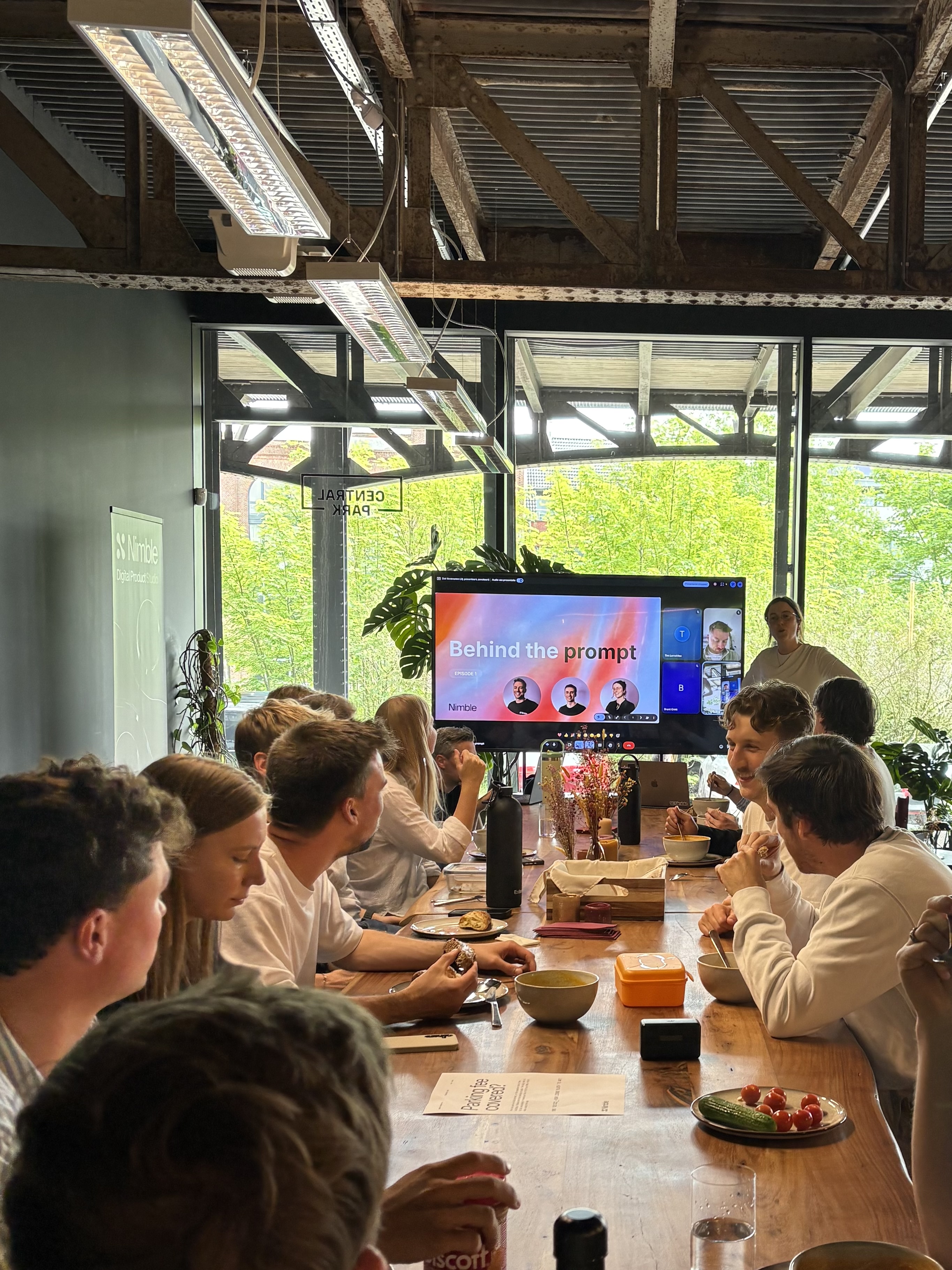
Her plan isn't a top-down rollout. It's closer to peer coaching: sit next to someone, ask how they actually work, and let good habits spread the way they do best, one person telling another. "It's good that I'm a talker, because a lot of this job is making sure that when someone builds a flow that works, it goes viral." What she wants to avoid just as much as silence is noise: twenty new tools onboarded with no one asking whether people actually use them, or whether they talk to each other at all.
It’s a deliberate choice to give this role to someone whose strength is people, not code. “In the end, the value of our progress is human. It’s not about how many lines you wrote or which tool you used. The world doesn’t care. Improving the lives of the many, that’s what we care about.” The technical depth already lives with the engineers. What the studio needed was someone who could take on this mission with focus: acting as its eyes and ears, uncovering the unknown unknowns, and turning individual discoveries into knowledge that spreads and sticks among peers.
Grounded by Support
Zoë chose both titles, since they complement each other perfectly and create cross-pollination. Support keeps her in the field, close to real, unglamorous problems, and the Internal AI Lead side is the same instinct pointed inward. In a sense, she's forward deployed for AI the same way Support already has her forward deployed for clients: out where the problems actually are, not behind a strategy deck. And keeping the support flow itself AI-native is the best of both worlds. "If you would ask me why I love these two titles, it's because I see something that isn't running smoothly, and I want to fix it, for clients as well as for Nimble." She compares it to arriving in a dark room and feeling your way around until you know every corner, then walking straight through it. Support has been that room, except it's a new layout every day; the studio's AI-native framework is never really finished, and that's what makes it so interesting to her.
Becoming an AI-native organization, is a people and org-transformation, dressed up as a technical one. Which, for a studio that sells exactly that transformation to its clients, might be the most honest place to start.
